
As Violations of Child Labor Laws Climb, What More Can Be Done to Protect Young Workers?
About 2.8 million children work in the United States—mostly in retail and hospitality. Some of these teens work to earn money for basic needs and expenses. Others are looking to gain real-world career experience.
But government investigators have found thousands of violations of child labor laws in recent years. These include everything from scheduling children to work longer than legally permitted to more egregious violations that put kids at risk of injury or death.
Today’s WatchBlog post looks at our new report on the risks facing working children and what should be done to better protect them.
Image

Some alarming trends emerge about children in the workplace
For decades, child labor laws have been in place to protect young people—especially when work interferes with school or puts them in physical danger. But nearly 90 years later, the U.S. Department of Labor (Labor) continues to find numerous violations of these laws.
Fatalities. About 24 children died each year from work-related incidents over the last decade. What data collected by Labor tells us about these deaths is limited, though. The department doesn’t publish much information about the cause or industry involved, or whether it cited any violations related to these deaths. Here’s what we do know:
Many of those fatalities occurred in agricultural industries. And, when the cause of death was reported for any industry, more than two-thirds of the fatalities involved transportation, such as a collision with a motor vehicle. Other young workers died from exposures to harmful substances/environments, equipment-related accidents, workplace violence, and falls.
Work-related child fatalities with reported causes, 2013-2023
Image
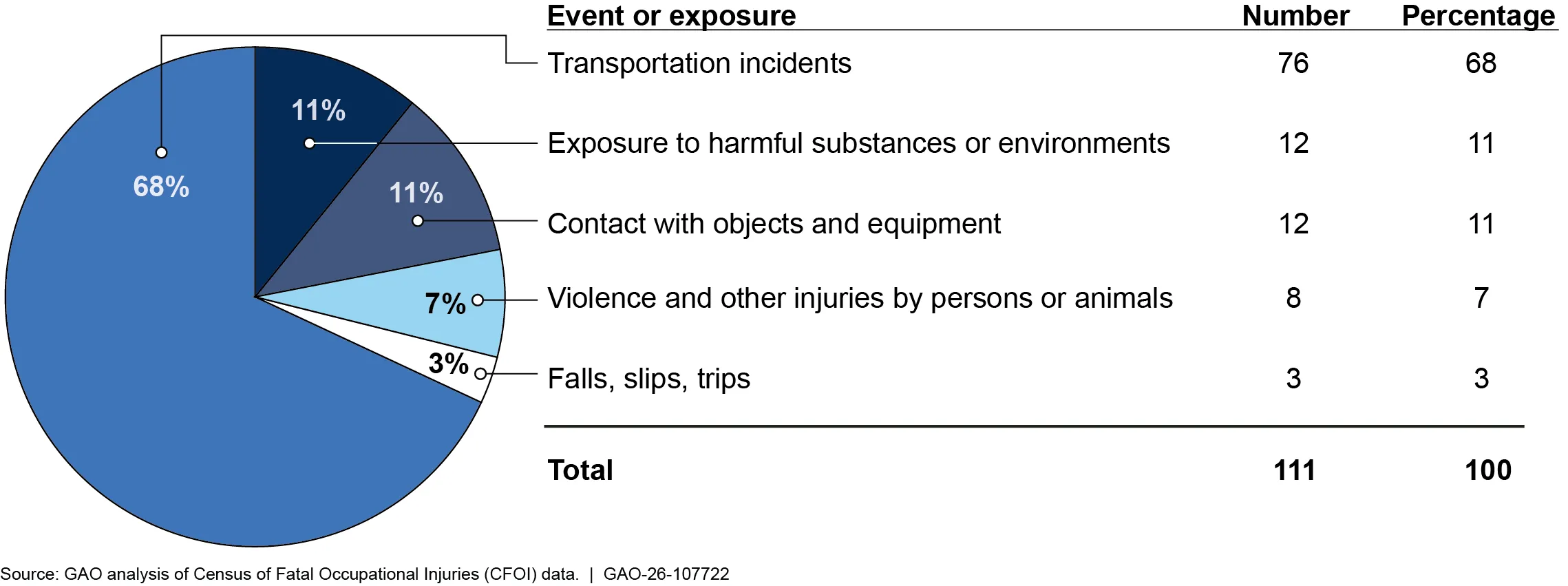
Based on Labor’s data, we also learned that:
- White children accounted for 70% of fatalities—followed by Hispanic (21%) and Black (5%) children
- Boys under the age of 18 represented 90% of the fatalities—even though boys and girls equally made up the under-18 workforce.
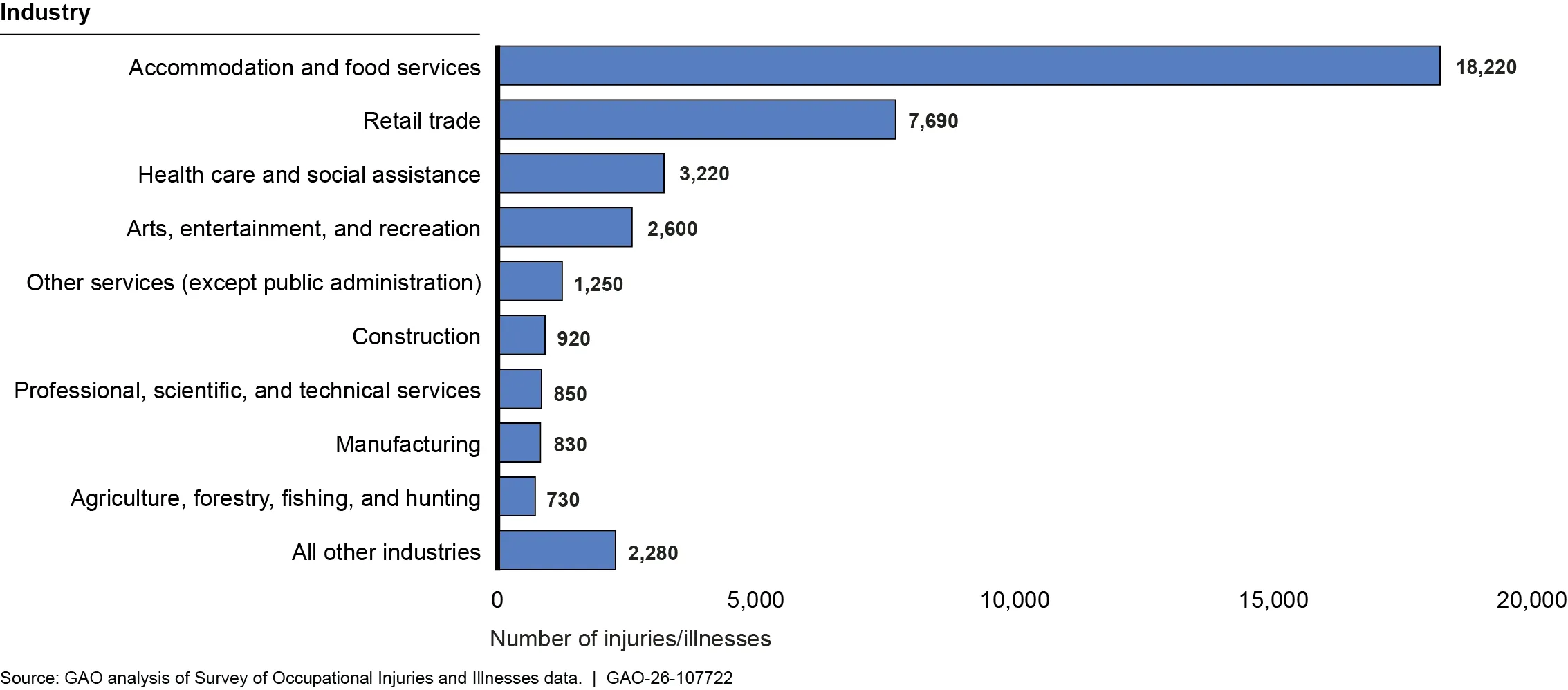
Injuries and Illnesses. On-the-job injuries can include everything from open wounds, burns, and cuts to broken bones and traumatic spinal cord or head injuries. Nearly half of these injuries and illnesses occurred among children working in food services (such as fast-food restaurants) or the accommodations industry (such as hotels). And about one-fifth occurred among children working in retail trade, such as in grocery stores.
Injuries and Illnesses Among Working Children by Industry, 2013−2023
Image
Child labor violations. Violations cited by Labor are generally on the rise. Over the past decade, Labor has found nearly 45,000 violations. Some of the most egregious violations cited employers for allowing children to do hazardous work, such as operating meat processing machines.
Most violations cited employers for scheduling children to work longer or later than permitted. And many of these violations occurred in the industries where many young people find their first jobs—in hospitality and food service, which includes hotels, restaurants, and grocery stores.
What’s being done to protect working children?
Some states have modified rules for working children in ways that are inconsistent with federal law. And that’s causing some confusion among employers, policymakers, and the public. Still, Labor enforces federal law throughout the U.S., regardless of state law.
Labor is working to raise public awareness about federal labor laws. To do so, it recently updated a website and created a public awareness campaign designed to reach children, teachers, parents, and employers with multi-language resources about child labor laws.
In addition, Labor recently launched an initiative that focuses on finding egregious violations and increases penalties for employers who violate child labor laws.
While these are steps in the right direction, it’s unclear whether Labor’s outreach and enforcement efforts are working as well as they should. In terms of enforcement, for example, Labor aims to use data to start investigations in locations where violations were most likely to occur. But some Labor officials who conduct the investigations told us that using this specific data did not help them find violators. Right now, the department does not have a systematic process to identify and evaluate additional data sources it can use to target its investigations.
We think Labor should continue to raise public awareness of this issue and improve data that can be used to prevent child labor violations. Doing so could better protect children and potentially save lives.
Be sure to read our full report to learn more about how Labor can address this issue.
- GAO’s fact-based, nonpartisan information helps Congress and federal agencies improve government. The WatchBlog lets us contextualize GAO’s work a little more for the public. Check out more of our posts at GAO.gov/blog.
- Got a comment, question? Email us at blog@gao.gov.
GAO Contacts
Image




Related Products

GAO's mission is to provide Congress with fact-based, nonpartisan information that can help improve federal government performance and ensure accountability for the benefit of the American people. GAO launched its WatchBlog in January, 2014, as part of its continuing effort to reach its audiences—Congress and the American people—where they are currently looking for information.
The blog format allows GAO to provide a little more context about its work than it can offer on its other social media platforms. Posts will tie GAO work to current events and the news; show how GAO’s work is affecting agencies or legislation; highlight reports, testimonies, and issue areas where GAO does work; and provide information about GAO itself, among other things.
Please send any feedback on GAO's WatchBlog to blog@gao.gov.